top of page


The Labyrinth
Location
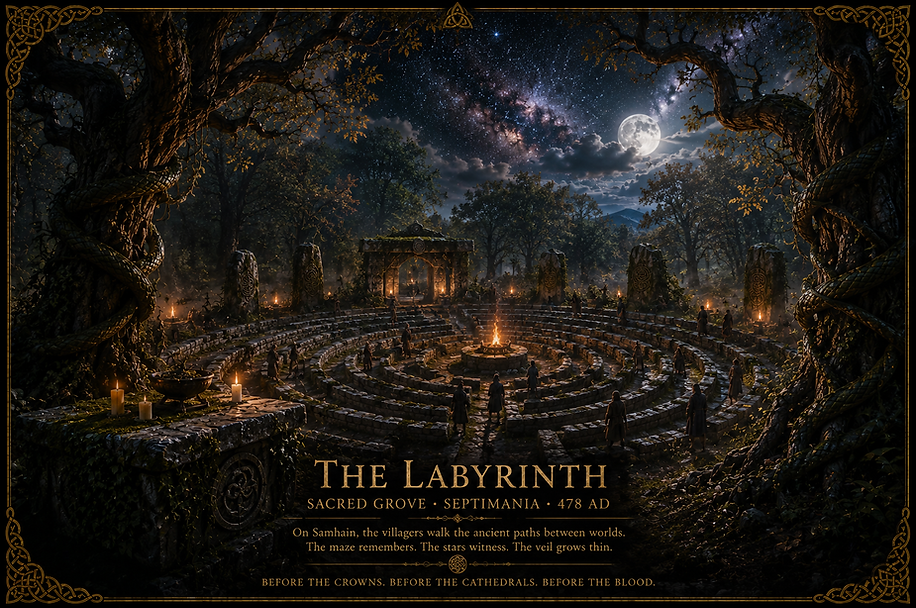
The Series' Central Magical Structure
Historical Accuracy
Fictional labyrinth inspired by Roman-era underground structures, not the later Paris Catacombs.
Historical Significance
Sources:
- 100% original invention — no historical or mythological source to verify against; internal consistency with the manuscript and Canon Timeline doc is the only check.
The Labyrinth's setting draws on real Roman-era Paris — a city of walls, quarries, and burial grounds centuries before its famous catacombs existed.
Historical Era
All Books (I–VII) — the series' central structure; forest entrance in Book I, referenced again in Book II
Novel Canon Role:
Merona searches beneath the city for the entrance to the Labyrinth and the knowledge guarded within it in Book I. Book II: Merona emerges from the Sacred Grove's labyrinth entrance carrying the Cauldron of Dagda at Samhain, 540 AD, beginning her journey to Constantinople — where a second, mirrored labyrinth lies beneath the imperial city itself. Avoid explaining what she learns or how the Labyrinth changes her.
A single mythological structure with at least two known physical entrances: a forest entrance at Septimania (Book I) and a catacomb entrance at Paris (Book I).
Grounded in real Roman-era Parisian underground infrastructure — quarries, crypts, and burial spaces — rather than the much later 18th-century municipal catacombs.
The series' central structure, referenced or entered across all seven Merovingian-era books.
the-labyrinth
bottom of page